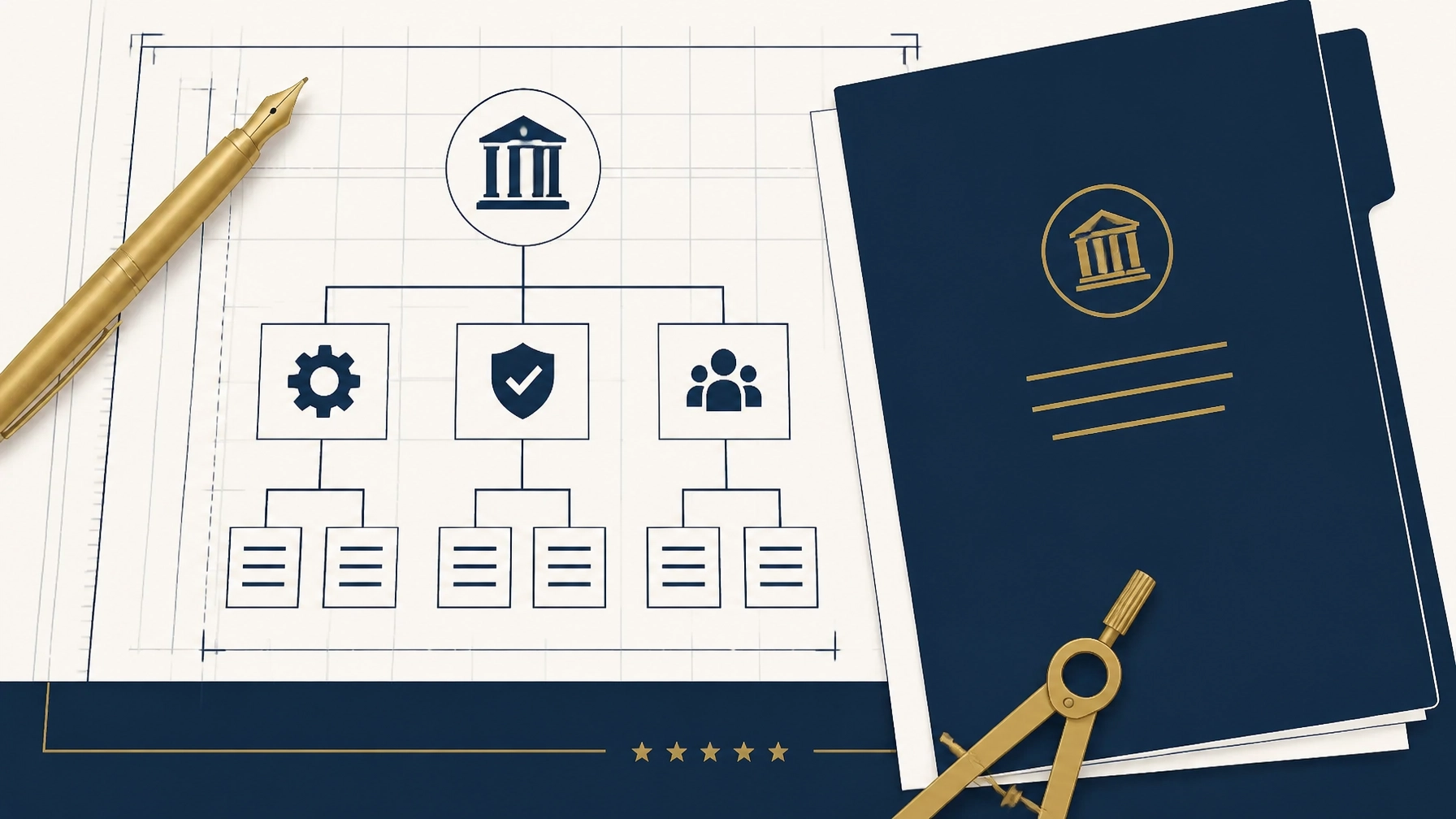
In highly regulated, high-impact environments: such as government contracting, aerospace, and critical infrastructure: operational delays are frequently attributed to external factors: shifting regulations, budgetary constraints, or technological gaps. However, data and performance trends in 2026 suggest a more internal constraint. The primary bottleneck in mission-critical delivery is often the leadership mindset.
When a leader operates with a rigid, operational-heavy focus, the organization enters a state of "stalled scalability." To break through these bottlenecks, leadership must transition from a "Grinder" methodology to an "Architect" framework.
The Taxonomy of the Bottleneck: Grinder vs. Architect
The difference between a stalled program and a scalable operation lies in how leadership views its role within the delivery ecosystem. In the context of government consulting and compliance, these two archetypes represent fundamentally different leadership operating systems.

Comparative Operational Framework
| Dimension | The Grinder Mindset | The Architect Mindset |
|---|---|---|
| Primary Focus | Immediate tasks and individual deliverables. | Systems, capabilities, and long-term governance. |
| Time Horizon | Short-term (Current milestone/sprint). | Strategic (6–36 month scalability). |
| Decision Style | Centralized; leader is the final approval node. | Decentralized; leader designs decision rights. |
| Risk Management | Reactive firefighting and personal heroics. | Proactive risk mitigation through systemic controls. |
| Compliance View | A series of hurdles to be overcome manually. | A foundational workflow integrated into operations. |
| Scalability | Linear; limited by the leader's bandwidth. | Exponential; driven by repeatable processes. |
Why the Grinder Mindset Fails in Regulated Environments
In high-stakes environments, the "Grinder" mindset is often a byproduct of high accountability. Because the stakes are high: involving federal compliance, national security, or significant public funds: leaders feel a compulsion to touch every detail. This instinct, while rooted in a desire for quality, creates several critical bottlenecks.
1. The Centralized Decision Trap
In a Grinder model, the leader becomes the "human router." Every non-standard decision, and many standard ones, must pass through a single point of authority. This slows down the tempo of operations, leading to missed deadlines and delayed program execution. In regulated environments, this delay is compounded by the need for meticulous documentation and audit trails, which the Grinder often produces manually.
2. Hero-Based Execution vs. Systemic Reliability
Grinders rely on "heroes": high-performing individuals who work excessive hours to meet mission requirements. While this may provide short-term wins, it creates a fragile infrastructure. If a "hero" leaves or burns out, the program risks non-compliance or failure. Architects, conversely, focus on Strategic Advisory & Enablement to ensure that the mission succeeds because of the system, not in spite of it.
3. Compliance as a Constraint, Not a Tool
For the Grinder, compliance is often seen as a bureaucratic obstacle. This leads to a reactive approach where documentation is completed at the last minute to satisfy an audit. This lack of structure increases the risk of error and limits the organization's ability to take on more complex contracts.

Shifting to the Architect Mindset: Building for Scale
To remove leadership as the bottleneck, organizations must adopt a systems-first approach. At Walton Global Enterprise, LLC (WGE), we help institutional partners transition into this "Architect" phase by implementing structured program delivery and operational accountability.
Standardizing Program & Operations Support
The Architect does not just "manage" a program; they design the environment where the program can manage itself. This involves:
- Defining Clear Roles: Moving away from "all-hands-on-deck" chaos to documented responsibilities.
- Establishing Governance Frameworks: Creating the "rules of the road" that allow team members to make decisions within compliant guardrails.
- Automating Compliance Documentation: Integrating regulatory requirements into the daily workflow so that audits become a non-event.
Operational Accountability
A core component of the Architect mindset is the implementation of performance tracking that does not require constant leader intervention. By establishing clear ownership and transparent metrics, the leader can shift from "detecting problems" to "refining the system."

How WGE Facilitates the Breakthrough
Walton Global Enterprise, LLC is structured to support leaders in this transition. Our compliance-first operations provide the discipline necessary to move from manual execution to institutional delivery.
- Compliance & Governance Support: We provide the "architectural blueprints" for regulatory compliance, ensuring that internal controls are documented and oversight requirements are met without slowing down delivery.
- Strategic Enablement: We help organizations align their mission-critical initiatives with a structured execution plan, removing the need for leader-dependent firefighting.
- The Margin Blueprint™: For leaders seeking a comprehensive framework for scaling operations while maintaining rigorous standards, The Margin Blueprint™ serves as the definitive guide for systemic growth.

Conclusion: Designing the Future of Delivery
The transition from Grinder to Architect is not merely a change in daily tasks; it is a shift in professional identity. In high-impact environments, the most valuable contribution a leader can make is not their own labor, but the design of a resilient, compliant, and scalable organization.
When leadership stops being the bottleneck, the organization can finally meet the full potential of its mission. Walton Global Enterprise, LLC remains a dedicated partner for agencies and institutions ready to implement the systems required for the next generation of mission-critical delivery.
Corporate Capabilities & Identifiers
Walton Global Enterprise, LLC
CAGE: 16PW4
UEI: VKVCWMMQ6JD6
Primary NAICS: 541611 (Administrative Management and General Management Consulting Services)
Secondary NAICS: 541618, 541990
For structured consulting and compliance support, visit our Procurement Portal or Contact Us to discuss your program requirements.
Leave a Reply