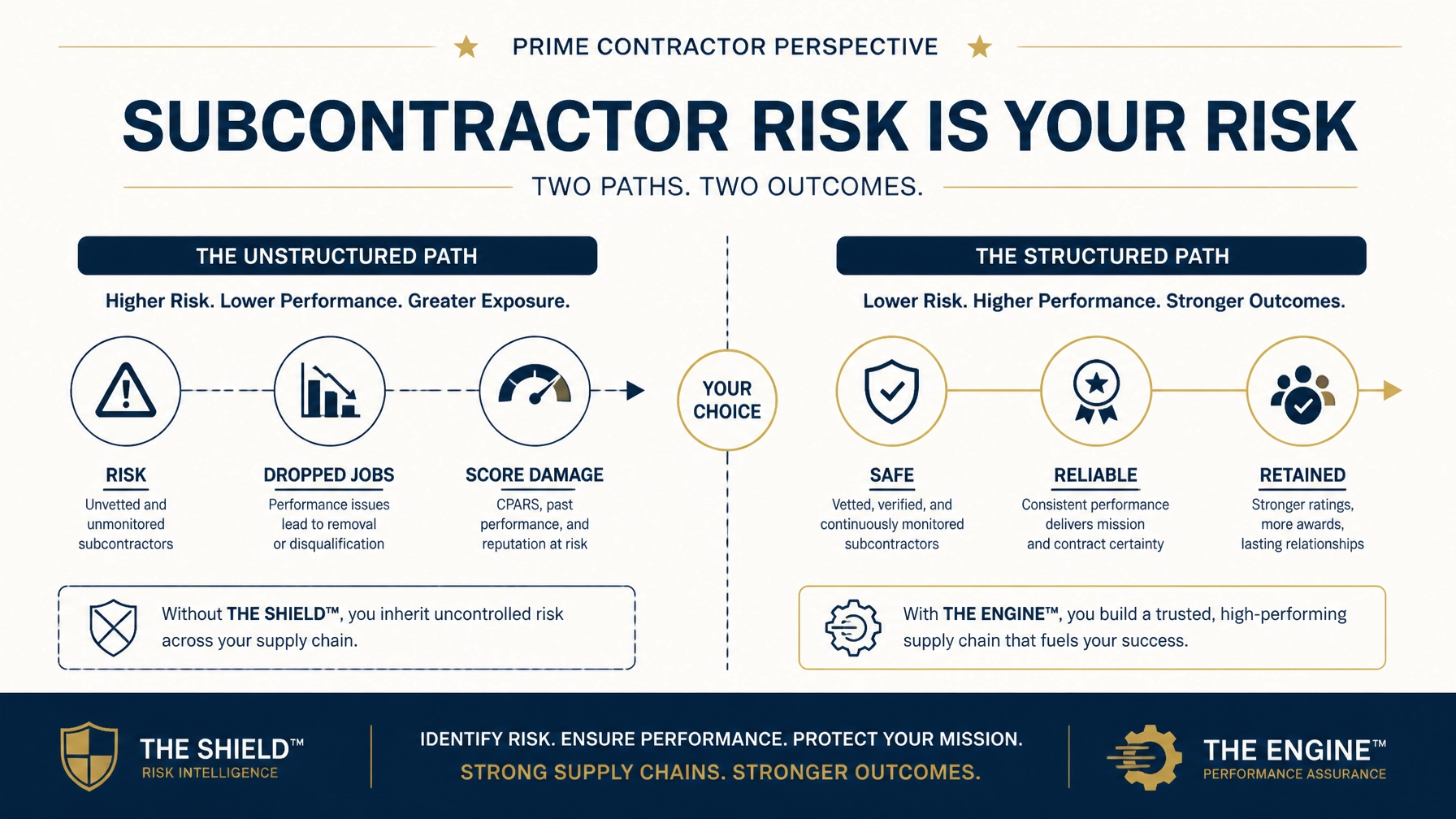
Why do big firms drop small teams on federal jobs?
Big firms take the blame when small teams slip.
The big firm owns the full job risk.
Late work can hurt the big firm fast.
Bad work can drop the big firm’s score.
Missed rules can cost the big firm cash.
Too much help takes time from the big firm.
That is why big firms drop weak small teams.
They want teams that need less watch and less help.
How can a small team prove it is safe to hire?
A small team must show it can run well.
Its work must be clear and on time.
Its written records must be neat and full.
Its checks must be done first, not late.
The big firm should not need to chase.
The big firm should not need to fix.
That is what makes a small team safe.

Big firms carry all the risk.
If the small team fails, they take the hit.
Their score can drop fast.
The job can be at risk.
That is why big firms drop small teams.
The fix is plain.
A small team must run its own work well.
Each task must be clear and on time.
Each check must be done before send-off.
The big firm should not need to watch.
At WGE, we use clear names for this.
Architecture of Accountability™ means who owns what.
THE SHIELD™ keeps the rules safe.
THE ENGINE™ keeps the work moving.
Triple Check Protocol™ means check the work three times.
Snapshot vs. Stress Test means a quick look vs. a real push.
This way of thinking was built by Walton Global Enterprise to help leaders use ideas from the GAO Green Book, OMB Circular A-123, NIST rules, and PMIAA practices.
Work gets done on time.
Files are right the first time.
No one has to chase us.
The big firm looks good.
Want to know if your small team is safe to hire?
We built a quick checklist for this. It takes 5 minutes. It shows you where your team might look risky to a big firm — and how to fix it before they ask.
Download the 5-Minute Subcontractor Readiness Checklist.
[Contact Walton Global Enterprise to get your copy.]
When you make the big firm feel safe, they keep you on the job.
Leave a Reply