Summary: This article explores a structured methodology for federal leaders and program managers to scale complex operations without sacrificing compliance or performance. Readers will learn the "Architect Framework," a strategic leadership approach designed to build operational resilience and institutional alignment in high-stakes environments.
The Problem: The Scalability Trap in Federal Contracting
In the fast-paced world of federal procurement and program execution, the pressure to "scale up" often precedes the necessary structural preparation. Whether an agency is responding to a new legislative mandate or a prime contractor is rapidly expanding its workforce to meet a Task Order requirement, the "Scalability Trap" is a constant threat.
The trap occurs when an organization attempts to increase its output, headcount, or geographic reach using legacy processes that were never designed for high-volume delivery. In government operations, scaling isn't just about adding more people; it’s about maintaining a razor-sharp focus on compliance, oversight, and mission-critical accuracy while the complexity of the mission doubles or triples. Without a structured framework, leadership becomes reactive, staff experience burnout, and the original mission: the "why" behind the operation: gets lost in the noise of administrative friction.
The Impact: When Growth Outpaces Governance
Ignoring the structural needs of a scaling operation creates profound operational and audit risks. In a regulated environment, "moving fast and breaking things" is not an option. If an operation scales without institutional alignment, several critical failures typically emerge:
- Audit Vulnerability: As volume increases, the "manual" compliance checks that worked for a small team become impossible to maintain. Documentation gaps occur, leading to negative findings during Contractor Performance Assessment Reporting System (CPARS) reviews or OIG audits.
- Operational Drift: Without clear process improvement and documented workflows, team members begin interpreting federal requirements differently. This lack of standardization leads to inconsistent delivery and missed milestones.
- Leadership Exhaustion: Strategic leadership requires a long-term view. However, in an un-structured scaling environment, leaders spend 90% of their time "firefighting" operational failures, leaving zero capacity for leadership development or long-term resilience.
- Failure to Overcome Adversity: Organizations lacking a structured framework are brittle. When unexpected adversity: such as budget shifts or personnel changes: hits, the lack of defined roles and processes causes the entire operation to stall.

The WGE Approach: The Architect Framework
At Walton Global Enterprise (WGE), we believe that compliance is the byproduct of disciplined operations. To help our institutional partners navigate the complexities of growth, we utilize the Architect Framework. This methodology pivots away from simple staffing and focuses on Operational Enablement: the art of aligning people, processes, and technology to the agency’s core mission.
The Architect Framework is built on three strategic pillars: Process Improvement, Operations, and Change Management.
1. Assessment & Institutional Alignment
Before scaling, we perform a deep-dive audit of the current state. This isn't just about what is being done, but how it aligns with the agency’s strategic goals. We look for "institutional friction": areas where current policies or lack of documentation hinder speed. We align our delivery model with federal standards like the OPM Executive Core Qualifications (ECQs), ensuring that strategic leadership is baked into every level of the program.
2. Structural Process Improvement
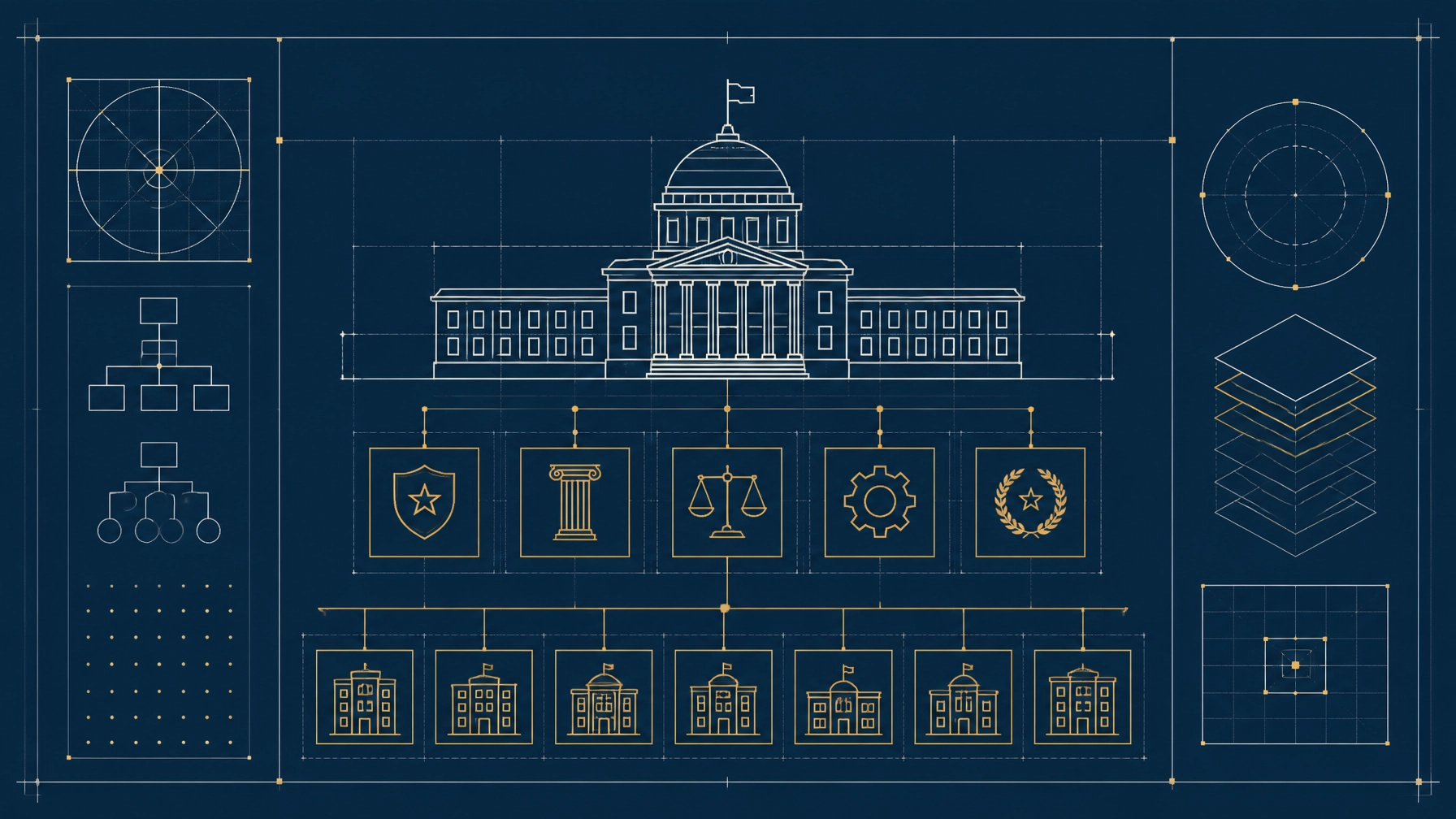
We treat operations like an architectural project. We build the "blueprints" for the work before the construction begins. This involves:
- Defining Ownership: Identifying clear lines of accountability (COR, PM, and Task Leads).
- Standardizing Workflows: Moving from "personality-driven" tasks to "process-driven" execution.
- Documenting Controls: Building internal controls that ensure audit readiness is a daily habit, not a quarterly panic.
3. Change Management and Resilience
Scaling is, at its heart, a change management exercise. To ensure resilience at work, we implement communication loops that keep the workforce engaged and informed. By providing a clear roadmap for growth, we reduce the anxiety that often leads to attrition during periods of expansion. This creates an environment where teams can overcome adversity because they know the "system" is designed to support them, not just demand more of them.

Practical Takeaways for Federal Program Leaders
If your organization is currently facing the challenge of scaling high-impact operations, consider these five actionable steps to implement the Architect Framework:
- Perform a "Friction Audit": Identify the top three administrative bottlenecks that slow down your team. Is it an approval process? A lack of a standardized template? Solve the friction before adding more personnel.
- Codify Your Decision Matrix: As you scale, you cannot be the sole decision-maker. Create a written matrix that defines which roles have the authority to make specific operational decisions. This is the foundation of strategic leadership delegation.
- Implement "Compliance-First" Reporting: Shift your reporting from "what we did" to "how we stayed compliant while doing it." Tracking compliance metrics alongside performance metrics ensures they remain prioritized.
- Build a Resilience Playbook: Document how your team should respond to common federal "adversities": contract pauses, funding delays, or key personnel departures. Having a playbook ready reduces reaction time and maintains mission continuity.
- Invest in Operational Enablement Training: Ensure your staff understands the "why" behind the processes. When team members understand how their specific task contributes to the broader agency mission, they are more likely to adhere to new, scaled-up workflows.

When to Bring in Walton Global Enterprise
Scaling an operation while maintaining 100% compliance is a high-wire act. While internal teams are experts at the mission, they often lack the bandwidth to simultaneously re-engineer the engine while the plane is in flight.
It is time to engage a professional vendor support team like WGE when:
- The Mission is High-Risk: When errors have significant financial, legal, or safety consequences.
- The Timeline is Compressed: When a new mandate requires immediate operational setup.
- The Complexity has Outpaced the Staffing: When your current leadership is overwhelmed by "the business of the business" rather than the mission itself.
- Audit Readiness is a Concern: When you need a third-party eye to ensure that your operational scaling is aligned with procurement and governance requirements.
Preparing for Your Next Audit Cycle
Successful scaling is not measured by the size of the team, but by the stability of the output. By adopting a structured framework that prioritizes operational enablement and strategic leadership, federal organizations can ensure that they are not just growing, but evolving.
Review your current processes today. Are they designed for the team you have, or the mission you are destined to achieve?
Leave a Reply