Summary
This article examines the critical distinction between mission execution and operational enablement for prime contractors operating in high-impact federal environments. Readers will learn how to transition from a task-focused delivery model to a structured operational framework that ensures long-term compliance, institutional alignment, and audit readiness.
In the competitive landscape of federal contracting, large-scale prime contractors often fall into a predictable trap: they prioritize "doing the work" above all else. This focus on mission execution: the technical delivery of a contract’s core requirements: is understandable. Whether it is managing a logistics chain, developing software, or providing engineering services, the delivery of the end product is what the government initially pays for.
However, as contracts grow in complexity and scale, technical execution alone becomes insufficient. For a prime contractor, the ability to deliver a product is only half the battle; the other half is the ability to sustain that delivery within the rigid, high-stakes framework of federal regulations and institutional expectations. This is where operational enablement becomes the defining factor between a successful long-term partnership and a contract marked by friction, performance issues, and audit failures.
The Problem: The 'Execution Only' Bias
Many prime contractors operate under the assumption that if the technical deliverables are met, the contract is a success. This "Execution Only" bias often leads to a neglect of the underlying operational scaffolding. In large-scale programs, technical experts are frequently tasked with managing complex administrative, compliance, and governance functions for which they may not be trained.
When a prime contractor focuses exclusively on mission execution without investing in operational enablement, they create an "Execution Gap." This gap is characterized by:
- Ad Hoc Governance: Decisions are made in silos without a centralized, documented process.
- Compliance Afterthoughts: Regulatory requirements are treated as a checklist to be completed at the end of a cycle rather than integrated into the daily workflow.
- Resource Strain: High-level technical talent is diverted to handle operational bottlenecks, reducing their effectiveness on the mission critical path.
- Institutional Misalignment: The contractor’s internal processes do not mirror the agency’s reporting structures, creating "translation errors" during performance reviews.

The Impact: Operational Fragility and Audit Risks
If ignored, the lack of operational enablement creates a state of "operational fragility." In this state, the program may appear to be performing well on the surface, but it lacks the resilience to withstand external pressures or internal transitions.
The risks of neglecting the operational layer are significant:
- CPARS Impact: Contracting Officers (COs) and Contracting Officer's Representatives (CORs) do not just grade the final deliverable; they grade the management, compliance, and responsiveness of the prime. Poor operational alignment often leads to lower Past Performance ratings, even if the technical work was adequate.
- Audit Vulnerability: Without a structured approach to compliance and governance, documentation becomes fragmented. When an audit occurs, the prime is unable to demonstrate the "why" behind their actions, leading to findings that can threaten the entire contract vehicle.
- Mission Slippage: When operations are not enabled through structured processes, small friction points: such as delayed reporting or misaligned schedules: snowball into major delays.
- Contract Leakage: Operational inefficiencies often manifest as cost overruns that cannot be easily justified, eroding the prime’s margins and undermining their relationship with the agency.

The WGE Approach: Elevating Operations Through Institutional Alignment
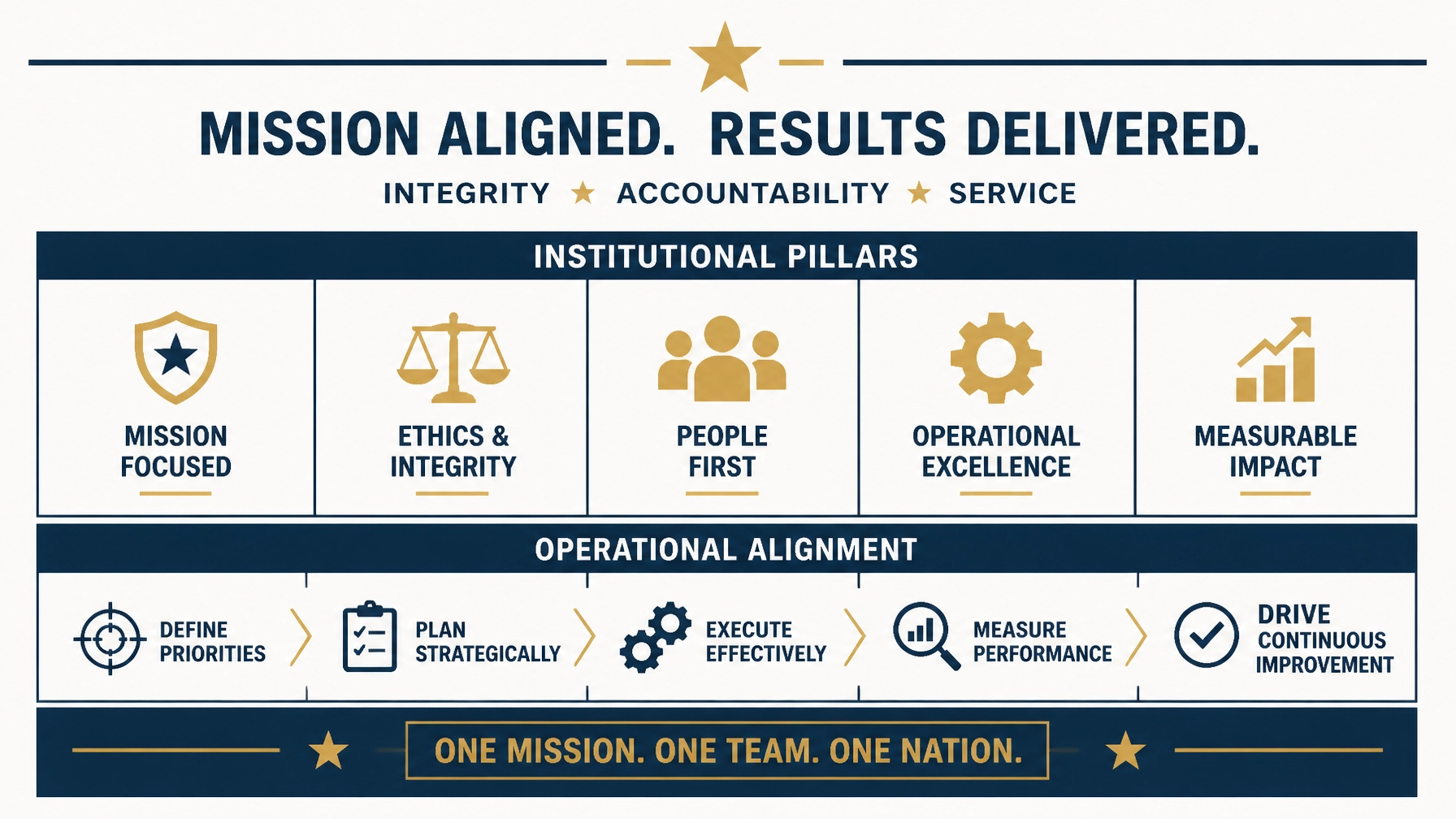
At Walton Global Enterprise (WGE), we define Operational Enablement as the bridge between contract scope and disciplined execution. It is the practice of building the management, infrastructure, and functional services that allow mission-critical work to proceed at pace and in full compliance.
Our approach centers on three core frameworks:
1. Process Improvement
We treat operations as a series of repeatable, measurable processes rather than a collection of tasks. By mapping the lifecycle of every deliverable, we identify where compliance hurdles exist and build them directly into the workflow. This ensures that compliance is a byproduct of the work, not an additional burden.
2. Operational Discipline
Structure is the foundation of accountability. WGE helps institutional organizations establish clear lines of ownership, standardized reporting rhythms, and integrated master schedules (IMS) that align the prime contractor’s internal tempo with the agency’s requirements.
3. Institutional Alignment
True operational enablement requires the contractor to speak the "language of the agency." This means aligning governance structures, risk management frameworks, and communication channels so that they are procurement-ready and audit-transparent. We move primes from being "vendors" to becoming "integrated partners" who operate seamlessly inside regulated environments.

Practical Takeaways for Prime Contractors
To move beyond "doing the work" and toward true operational enablement, prime contractors should implement these four strategies immediately:
- Establish a Governance Rhythm: Define a weekly and monthly cadence for leadership reporting that focuses on operational health (risks, compliance, and budget) separately from technical progress.
- Centralize Documentation: Move away from local drives and disparate spreadsheets. Implement a centralized, compliance-aligned document management system that tracks the lifecycle of every decision.
- Standardize Stakeholder Management: Create a clear map of agency stakeholders and their specific reporting needs. Ensure that your operational team: not just your technical team: is actively managing these relationships.
- Integrate Risk Management: Treat operational risk (e.g., staff turnover, regulatory changes) with the same severity as technical risk. Document mitigation strategies and review them during every governance cycle.
When to Bring in WGE
Managing the operational complexity of a large-scale federal contract is often a full-time requirement that goes beyond the capacity of existing technical leadership. You should consider bringing in Walton Global Enterprise when:
- You are transitioning a large program and need to ensure continuity of operations without disrupting mission delivery.
- Your program is facing increased regulatory scrutiny or upcoming audit cycles.
- There is a disconnect between your technical success and your performance ratings (CPARS).
- Your team is overwhelmed by the "management burden" of a multi-stakeholder, high-impact environment.

Soft CTA
Effective mission execution is a requirement, but operational enablement is a strategy for long-term success. As you prepare for your next audit cycle or program review, take a moment to evaluate your current processes. Are they built to withstand scrutiny, or are they built only to deliver a task?
Review your current operational framework to ensure your organization is prepared for the demands of the next generation of federal contracting.
Leave a Reply